
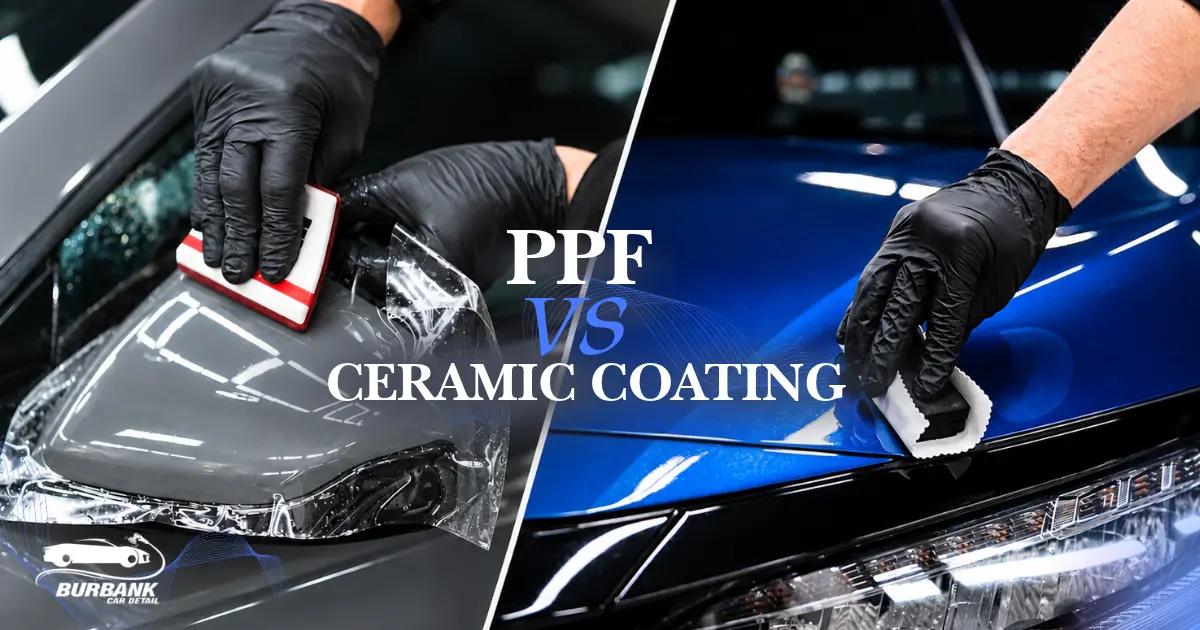
Rock chips on the hood, swirl marks in the sun, stubborn dirt, and fading gloss can make even a relatively new car look older than it is. That is why drivers often end up comparing PPF vs ceramic coating when deciding how to protect their paint. The main difference is straightforward: paint protection film provides a physical barrier between your paint and road debris, while ceramic coating mainly adds surface protection, water repellency, gloss, and easier cleaning.
Neither option is automatically better for every car. If highway rock chips are your biggest concern, PPF usually provides the more relevant protection. If you mainly want easier washing, stronger water behavior, and a glossier finish, ceramic coating may make more sense. Some owners also combine the two. The right choice depends on how you drive, where you park, the condition of the paint, how long you plan to keep the vehicle, and how much protection you actually need.
What Is Paint Protection Film, and What Does It Protect Against?
Paint protection film, commonly called PPF, is a transparent protective film installed over painted body panels.Instead of changing the paint itself, the film creates an additional physical layer over it. This makes PPF particularly useful on areas that take frequent impacts from gravel, sand, road debris, insects, and other contaminants.
3M lists areas such as hoods, bumpers, mirror backs, rocker panels, door edges, and trunk ledges as common locations for paint protection film. Its films are designed to help protect against chips, scratches, stains, and other surface damage. Coverage can be tailored to the vehicle.
A driver who spends a lot of time on freeways might choose front-bumper, hood, fender, and mirror protection. A full-front package expands protection across the panels most exposed to road debris. Full-body PPF provides broader coverage but also involves considerably more material and installation time. For professional installation, see paint protection film installation in Burbank. Many modern PPF products also have self-healing properties. 3M explains that minor scratches or marks in certain films can become less visible when heat is applied to the film surface. That does not mean PPF repairs the paint underneath.
A deep scratch that cuts through the film, a dent from a hard impact, or paint that was already chipped before installation will not magically disappear. Self-healing refers to minor marks in the film itself. That distinction is important when evaluating PPF for rock chip protection.
Can PPF Be Installed Over an Existing Ceramic Coating?
The surface should be professionally assessed and prepared first. For 3M's system, the answer is specifically no: 3M says existing ceramic coating should be professionally removed before installing its paint protection film. It does, however, allow compatible ceramic coating to be applied over the PPF afterward. Other manufacturers may have different preparation requirements, so the film and coating systems being used should always be checked before installation.
The PPF vs ceramic coating decision becomes much easier once you decide what you are trying to protect against. If road debris and rock chips are the main concern, paint protection film provides the physical barrier ceramic coating cannot. If your priorities are gloss, water repellency, and easier maintenance, ceramic coating may give you the result you want without covering the vehicle in film. And if you want both forms of protection, targeted PPF combined with a compatible ceramic coating can make sense when installed in the correct sequence.
The best setup depends on your driving habits, vehicle condition, budget, and expectations. Burbank Car Detail can inspect your paint and discuss whether PPF, ceramic coating, or a combination fits how you actually use the vehicle. You can contact Burbank Car Detail for a quote and compare coverage options before deciding.
What Is Ceramic Coating, and What Does It Actually Do?
Ceramic coating is a liquid-applied protective treatment that bonds to a properly prepared vehicle surface. Unlike PPF, it does not create a thick physical barrier against gravel or other impact damage. Its strengths are different. A professional coating can make the surface more hydrophobic, improve gloss on glossy paint, reduce how strongly some contaminants stick to the finish, and make routine cleaning easier.
Burbank Car Detail describes its ceramic service as a liquid coating applied after washing, decontamination, inspection, and any needed paint correction. The coating is then allowed to bond and cure before final inspection. That makes ceramic coating vs paint protection film less of an apples-to-apples comparison than it first appears. Ceramic coating can help with surface maintenance. It does not stop a rock traveling at highway speed from physically striking the paint. It also does not correct existing scratches simply because it is applied over them. Swirl marks, haze, or oxidation may need polishing or paint correction first. For owners considering this option, professional ceramic coating in Burbank provides more detail on the process.
Can You Wax Over Ceramic Coating?
Wax is usually unnecessary when a ceramic coating is functioning properly, because the coating itself is already designed to provide surface protection and water behavior. Whether a wax or topper is compatible depends on the coating system. Using an incompatible product can alter the surface characteristics or interfere with the coating's intended behavior, so follow the coating manufacturer's recommendations rather than assuming any wax is suitable. For more detail, see waxing a ceramic coated car.
PPF vs Ceramic Coating: Protection, Cost, and Lifespan Compared
|
Comparison factor |
Paint Protection Film |
Ceramic Coating |
|
Rock chips and scratches |
Provides a physical film between road debris and the paint. Some products can self-heal minor marks in the film. |
Does not provide the same physical impact protection against rock chips or deeper scratches |
|
Gloss and appearance |
High-quality gloss film can preserve the appearance underneath; matte films can also change the finish. Final appearance depends heavily on paint condition and installation quality. |
.Can enhance gloss and make well-prepared paint look richer and more reflective. |
|
Water and contamination |
Some modern PPF products already have hydrophobic or stain-resistant top layers |
Hydrophobic behavior and easier cleaning are major reasons owners choose ceramic coatings. |
|
Cost |
Depends heavily on partial, full-front, or full-body coverage, vehicle size, film, and labor. |
Depends on vehicle size, paint preparation, coating system, and labor. |
|
Typical lifespan |
Burbank Car Detail lists roughly 5–10 years as an average range, depending on product, care, and environmental exposure |
The shop lists roughly 2–5 years as an average range, again depending on product and maintenance. |
|
Maintenance |
Still needs regular washing and appropriate film-safe care. |
Still needs washing and careful maintenance; it is not a maintenance-free surface. |
|
Repair or renewal |
Damaged film can often be removed and replaced on the affected panel or section. |
Worn coating may need inspection, surface preparation, correction where needed, and reapplication. |
Burbank Car Detail gives the 5–10 year range for its film coating and 2–5 years for ceramic coating, but actual service life can vary with the product, exposure, installation quality, and aftercare. Warranty length should also not automatically be treated as guaranteed service life. Appearance matters too. Protecting paint does not remove defects already underneath it. If existing swirls or haze are affecting the finish, a polishing service may be part of the preparation rather than part of the protective product itself. For more on coating durability, see how long a ceramic coating lasts.
Which Should You Choose for Your Car?
The best answer depends on the problem you are trying to solve. If you drive on freeways regularly and your biggest concern is fresh rock chips on the bumper, hood, fenders, and mirrors, targeted PPF usually makes more sense. A physical film is better suited to that type of exposure than a liquid coating.
If your priority is gloss, water repellency, and making regular washing easier, ceramic coating may be the better fit. For a new car, it can be worth considering protection before road wear accumulates. That does not mean brand-new paint should automatically be covered without inspection. Even a new vehicle can arrive with light swirls, transport marks, contamination, or dealer-installed defects that should be evaluated first. You can learn more about the best time to install paint protection on a new car.
For owners who want both physical protection and easier maintenance, PPF and ceramic coating can also be combined. A common approach is to prepare the paint, install PPF on the desired areas, and then apply a compatible coating over the film and/or exposed paint according to the product manufacturer's instructions. 3M, for example, says ceramic coating should be removed before its PPF is installed, while compatible ceramic coating can be applied over its film afterward. So, is ceramic coating better than PPF? Not really.
They solve different problems. PPF is better suited to physical impact protection. Ceramic coating is better suited to surface behavior, gloss, and easier cleaning. If budget is limited, you also do not automatically need a full-body PPF. Protecting the front bumper, hood, mirror caps, or other high-exposure areas may provide a more practical balance between cost and protection.
What Preparation and Aftercare Do PPF and Ceramic Coating Need?
The protective product is only one part of the result. What is underneath it matters, and what happens after installation matters too.
Assess and Prepare the Paint Before Installation
Protection does not repair existing paint damage. Before PPF or ceramic coating is installed, the vehicle should be cleaned, decontaminated, and inspected so the condition of the paint is understood. 3M's PPF installation guidance calls for removing surface contamination and residue, cleaning the surface thoroughly, and performing a final inspection before installation. It also says existing ceramic coating should be removed before installing its PPF.
Light clear-coat defects such as certain swirl marks or haze may be correctable through polishing. Deeper scratches, paint chips, or dents require a different approach because applying PPF or ceramic coating over them does not restore missing paint or reshape damaged metal. That is why paint correction before coating may be recommended when the existing finish needs correction. If you are unsure what type of damage can actually be improved, see can detailing remove scratches. Not every vehicle needs extensive correction. The preparation should match the actual condition of the paint and the desired final result.
Follow the Product’s Curing and Washing Instructions
PPF and ceramic coatings both need proper aftercare. The exact waiting period before washing or exposing the surface to certain conditions depends on the installed product, so owners should follow the instructions provided by their installer and manufacturer rather than using one universal curing deadline. For example, 3M recommends waiting about one week before washing or waxing certain PPF products to allow proper adhesion to develop. Regular care should also remain gentle.
Use clean wash media and appropriate drying towels, remove contamination promptly, and be careful around exposed film edges. Ceramic-coated paint can still develop swirl marks if it is washed poorly, and self-healing PPF still has limits. For more detailed care guidance, see ceramic coating maintenance and how to protect your car from swirl marks
Can You Wax Over Ceramic Coating?
Wax is usually unnecessary when a ceramic coating is functioning properly, because the coating itself is already designed to provide surface protection and water behavior. Whether a wax or topper is compatible depends on the coating system. Using an incompatible product can alter the surface characteristics or interfere with the coating's intended behavior, so follow the coating manufacturer's recommendations rather than assuming any wax is suitable. For more detail, see waxing a ceramic coated car.
 /
 /