
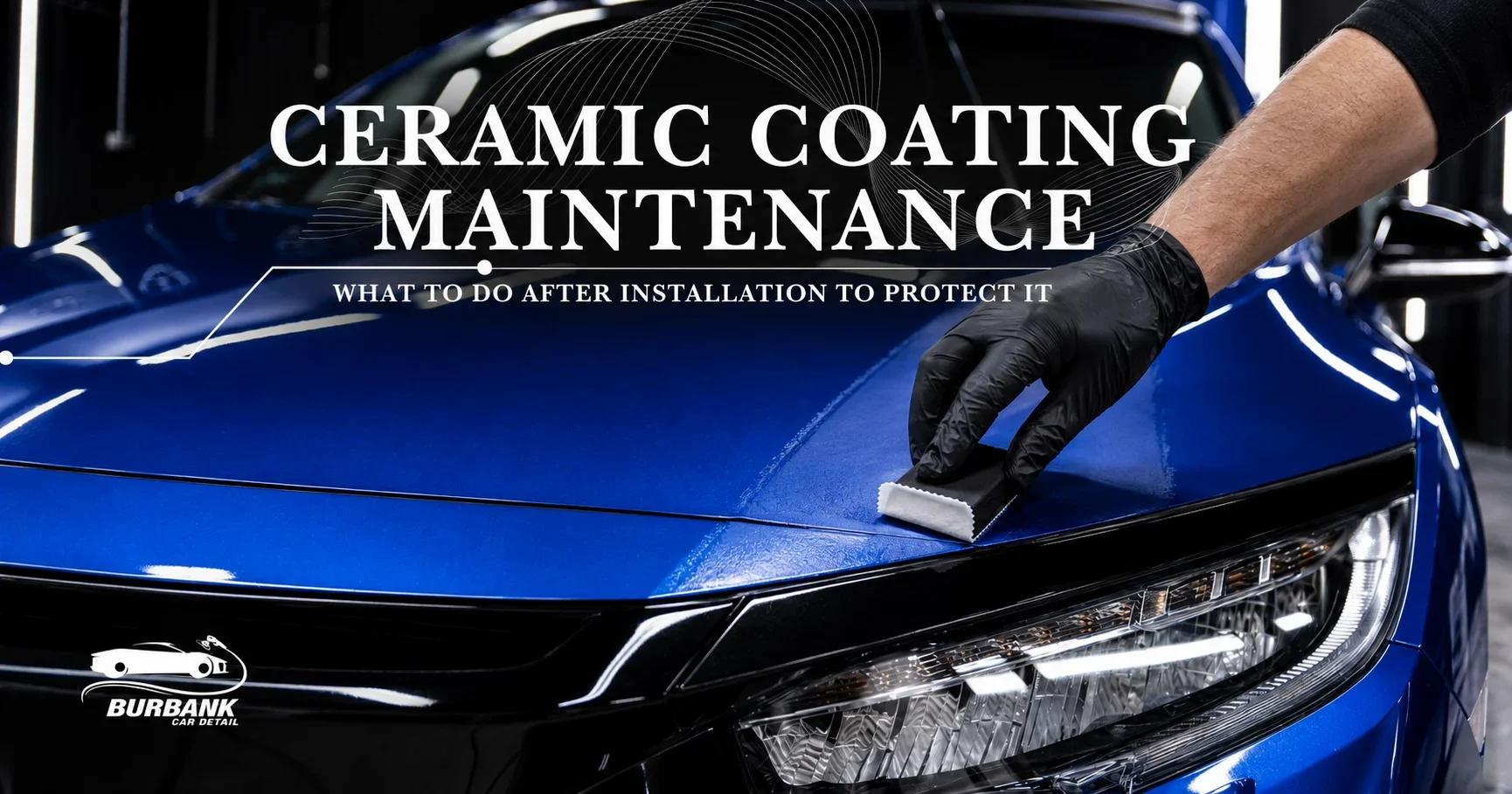
A ceramic coating can make your car easier to clean, improve gloss, and help protect the paint from everyday contamination. But it does not eliminate maintenance. Good ceramic coating maintenance starts as soon as the vehicle leaves the detail shop and continues with the way you wash, dry, and handle contamination.
The most important part of ceramic coating aftercare is simple: protect the coating while it cures, wash it without unnecessary abrasion, and deal with contaminants before they have time to sit on the surface. If you are wondering how to maintain ceramic coating properly, remember that the coating manufacturer and your installer should always have the final word. Cure times, approved chemicals, and maintenance products can differ significantly between coating systems. Ceramic Pro, for example, publishes a multi-week cure period for its products, while System X lists a much shorter period for reaching full hardness. This is one reason a universal timeline should not be applied to every coating.
What to Do During the Ceramic Coating Curing Period
The first few days after installation deserve extra attention. The coating is still developing its final characteristics, and unnecessary contact with the paint can interfere with that process. During this period, avoid washing the vehicle unless your installer says it is safe. Keep it away from sprinklers when possible, don't park under shedding trees, and avoid unnecessary wiping. Bird droppings, tree sap, bugs, pollen, and standing water deserve quick attention because they can stain or leave deposits on a freshly coated surface. Ceramic Pro specifically advises avoiding washing and water exposure during its recommended curing period and taking extra care around sap, pollen, bird droppings, and similar contamination.
This is also why there is no single answer to how long after ceramic coating I can wash the car. Temperature, humidity, coating chemistry, application method, and manufacturer requirements can all affect aftercare instructions. Ask your installer when normal washing can begin rather than relying on a number you found online.
Can Ceramic Coating Get Wet After 24 Hours?
Sometimes, but don't assume 24 hours is enough for every coating. Different manufacturers publish different curing instructions. System X, for example, says its coating takes roughly two to three days to reach full strength and recommends being particularly careful during that period. Ceramic Pro's published aftercare instructions specify a substantially longer curing process.
If unexpected rain or dew gets on the car, don't panic and start rubbing the paint. Avoid aggressive wiping. Follow the instructions provided with your particular coating, and contact your installer if you see standing water, mineral spots, or contamination you aren't comfortable removing yourself. That's one of the most important things to remember about what to do after ceramic coating.
How to Wash a Ceramic-Coated Car
Once your installer says normal washing is safe, technique matters more than complicated equipment. Start with the car parked in the shade and make sure the paint is cool. Rinse away loose dirt first. Clean the wheels with separate tools so brake dust isn't transferred onto the paint. Then use a clean microfiber wash mitt and a two-bucket method: one bucket for the wash solution and another for rinsing the mitt. Work from the cleaner upper sections toward the dirtier lower areas, rinse thoroughly, and dry the vehicle promptly. Gtechniq recommends the two-bucket method, a quality wash mitt, pH-neutral shampoo, and careful microfiber drying for coated vehicles.
The best soap for ceramic-coated car paint is generally a coating-compatible, pH-neutral automotive shampoo. Avoid assuming that more foam, stronger chemicals, or added gloss automatically means better cleaning. Ceramic Pro specifically recommends pH-neutral automotive soap and warns against products containing wax or cleaners outside its recommended pH range. A proper ceramic coating-safe car wash should also minimize unnecessary physical contact. Automatic brush washes can introduce scratching and marring, while dirty wash mitts can drag trapped grit across the surface. How often should you wash? There is no need to chase a rigid calendar. A garage-kept weekend vehicle will need different care from a daily driver exposed to traffic film, dust, rain, construction debris, or tree contamination.
Can I Just Rinse Off My Ceramic-Coated Car?
For a light layer of dust or pollen, sometimes a rinse can help. But rinsing alone usually isn't a substitute for a proper maintenance wash. Road film, oils, brake dust, bug residue, and bonded grime often need shampoo and gentle physical cleaning to release them. Even IGL's aftercare guidance distinguishes a simple rinse from the regular washing needed to manage contamination over time. And don't leave ordinary rinse water sitting on the paint until it evaporates. Minerals in water can remain behind and create spotting. System X and Ceramic Pro both recommend drying coated vehicles rather than allowing tap water to air-dry.
How to Remove Water Spots, Bird Droppings, Bugs, and Tree Sap
A coating gives you more protection, but contaminants still need attention.
-
Bird droppings and bugs: Soften the contamination first with a coating-approved detail spray or cleaner. Lift it gently with a clean microfiber towel rather than scrubbing.
-
Tree sap: Don't scrape it with a fingernail or attack it with a random solvent. Use an approved product and allow it time to soften the material before removal.
-
Water spots: Begin with a normal wash. If spots remain, use a water-spot remover specifically approved for your coating. System X recommends prompt, gentle removal of water spots, bird droppings, sap, tar, and similar contamination rather than aggressive polishing or excessive force.
If a spot remains after safe cleaning, professional help is usually smarter than progressively stronger chemicals. A detailer can determine whether you're seeing surface deposits, staining, or actual etching.
Parking location matters too. If your vehicle regularly sits outside, see how parking under trees can damage car paint for more on sap, bird droppings, pollen, and moisture.
What Can Damage Ceramic Coating?
Ceramic coating is durable, but it isn't an invisible force field. One of the biggest ceramic coating maintenance mistakes is treating coated paint as if it cannot scratch. Automatic wash brushes, abrasive towels, dirty wash media, and dry wiping can still create defects. Washing hot paint in direct sunlight can also make products and water dry too quickly, increasing the chance of streaking and spotting. Ceramic Pro specifically warns against brush washes, abrasive materials, washing hot surfaces, polishing compounds, and unsuitable cleaning products.
Other things on the what not to do after ceramic coating list include aggressive degreasers, unapproved acidic or alkaline cleaners, polishing compounds, and clay-bar use unless a qualified detailer determines that type of correction is appropriate. IGL likewise advises against abrasive clay bars and harsh chemical cleaners on coated paint. If you want to know how to protect ceramic coating, start by reducing friction. Clean tools, lubrication, gentle washing, and proper drying matter. This is also why cheap car washes can damage your paint, even when a coating is present.
Wax, Toppers or Maintenance Sprays: What Should You Use?
Traditional wax usually isn't necessary over a professionally installed ceramic coating. In some systems, manufacturers specifically advise against it because it can interfere with the surface characteristics you're trying to maintain. Both Ceramic Pro and System X tell customers not to wax their coated surfaces and instead recommend coating-specific maintenance products.
A quick detailer is mainly useful for light cleaning and lubrication. A ceramic coating topper or ceramic coating boost spray is designed to refresh characteristics such as slickness, gloss, or water behavior. That doesn't mean every ceramic coating needs a booster every three months. Your ceramic coating care products should match the coating already on the vehicle. Gtechniq recommends using maintenance boosters according to the particular product's directions rather than applying them on an arbitrary schedule.
Before putting any wax, sealant, spray coating, or chemical on the paint, check what your installer recommends.
Signs Your Ceramic Coating Needs Professional Maintenance
Water no longer flying off the hood doesn't automatically mean your coating has failed. Road film, mineral deposits, and embedded contamination can cover the surface and reduce its apparent hydrophobic behavior. A proper wash or decontamination may restore performance without requiring a new coating. Gtechniq recommends routine inspection and maintenance alongside washing and contamination removal. Consider a ceramic coating inspection when you notice stubborn water spots, rough-feeling paint, uneven gloss, or contamination that stays after washing, or areas that suddenly get dirty much faster than the rest of the vehicle. These may look like signs ceramic coating is failing, but the coating might simply need professional decontamination or a compatible maintenance treatment.
Ceramic coating professional maintenance can involve inspection, deep cleaning, decontamination, a booster, localized correction, or reapplication where necessary. Good ceramic coating maintenance isn't complicated. Follow the installer's curing instructions, wash with clean tools and coating-compatible products, dry the vehicle instead of letting water sit, and remove contaminants before they become harder to deal with. Most importantly, don't experiment when something looks wrong.
 /
/ /
/