
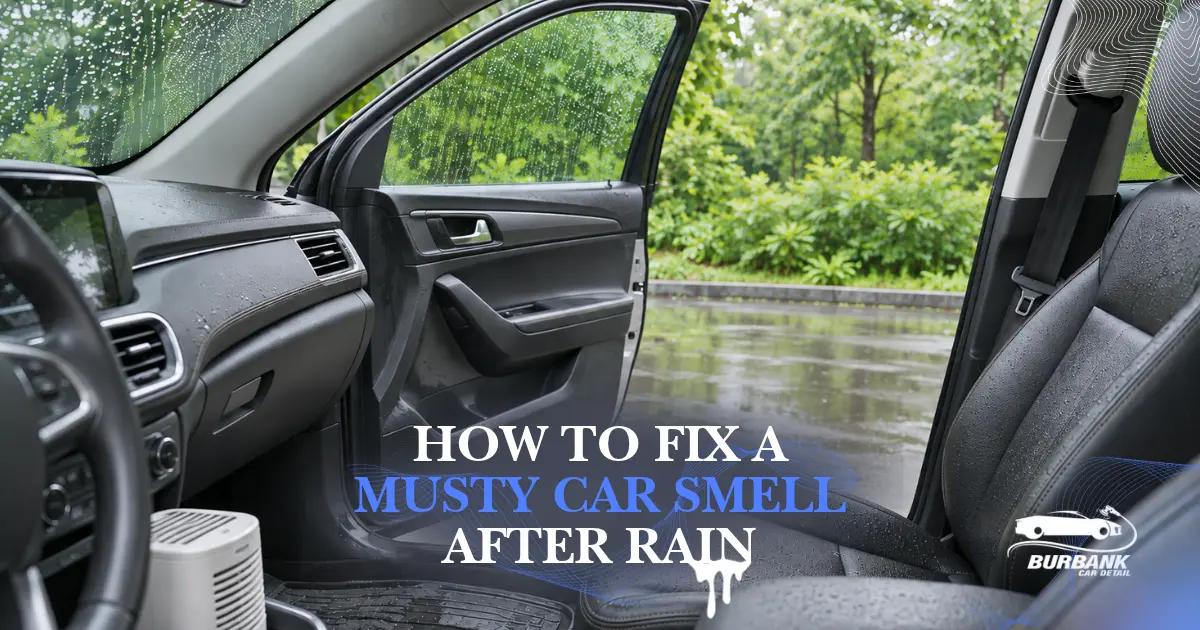
If your car smells musty after rain, the odor is usually a sign that moisture is still trapped somewhere in the interior. Wet floor mats, damp carpet padding, soaked upholstery, or water entering through a seal can all leave a stale, mildew-like smell. The best approach to how to get rid of musty smell in car is to work in the right order: find and stop the moisture source, remove as much water as possible, dry the affected materials thoroughly, clean them appropriately, and check whether the dampness returns.
Air fresheners may cover the smell temporarily, but they cannot solve trapped moisture. A musty odor also does not automatically prove that mold is growing. Start by finding where the interior is damp before deciding what kind of cleaning or repair is needed. For smoke, food, pets, and other unrelated odors, see our guide on how to remove smoke and other stubborn car odors.
Why Does Your Car Smell Musty After Rain?
If you are asking, “Why does my car smell musty after it rains?”, start with the places where water can collect without being immediately obvious. Wet rubber or carpeted floor mats are easy to notice. Moisture trapped underneath the carpet can be harder to find.
Check:
-
Under removable floor mats
-
Driver and passenger footwells
-
Carpet edges near the doors
-
Areas around door and window seals
-
Around the sunroof, if equipped
-
Under or around seats where accessible
-
The trunk floor
-
The spare-tire compartment
-
Damp clothing, umbrellas, towels, or other items left inside
The top layer of carpet can sometimes feel dry while the padding underneath remains damp. Seat upholstery can behave similarly because foam beneath the visible fabric may retain moisture longer than the surface.
Different seat materials also respond differently to water and cleaning, so our guide to cloth vs. leather car seats can help you understand the care each material may require.
If the same footwell, trunk area, or section of carpet becomes wet after every rainstorm, cleaning the interior alone is unlikely to solve the problem. Repeated moisture may indicate a leak around a weather seal, body opening, drain, or another part of the vehicle that needs inspection.And while a musty smell in car does not confirm mold, persistent moisture should not be ignored. CDC notes that damp and moldy environments can cause symptoms such as coughing, wheezing, eye irritation, or other reactions in some people, particularly those who are sensitive to mold.
How to Dry Wet Car Carpet and Remove Trapped Moisture
When rainwater has entered the interior, drying should come before deep cleaning. Adding shampoo or another liquid cleaner to already saturated carpet can introduce even more moisture. For minor rainwater wetting without visible mold or flood contamination, use an ordered drying process.
1. Remove Wet Items
Take out wet umbrellas, clothing, towels, bags, and removable floor mats. Do not leave a soaked mat sitting directly on top of the carpet. That keeps moisture trapped between the two surfaces.
2. Blot Excess Water
Use clean absorbent towels to remove as much surface water as possible. Press rather than aggressively rubbing the material. The goal at this stage is simply to reduce the amount of water that still needs to evaporate or be extracted.
3. Use Equipment Designed for Liquid Extraction
If extraction is needed, use equipment specifically rated for collecting liquids and follow the manufacturer's operating instructions. Do not use an ordinary dry-only household vacuum on wet carpeting. Professional extraction equipment may be helpful when a significant amount of water has entered the carpet but the problem remains within the scope of normal interior cleaning.
4. Dry Floor Mats Separately
Remove carpeted mats and allow them to dry fully in a dry, well-ventilated location. Rubber mats can also hold water underneath, so removing them gives the vehicle carpet a better chance to dry.
5. Check Below the Surface
Knowing how to dry wet car carpet means thinking about more than what you can touch.If accessible carpet edges reveal damp padding underneath, the interior may need more drying than surface airflow alone can provide. EPA recommends drying wet materials within approximately 24 to 48 hours as a general moisture-control practice intended to reduce the chance of mold growth. That guidance was written for buildings and household materials, so it should not be treated as a guaranteed vehicle drying time. The useful principle is simply to act promptly rather than allowing wet materials to remain damp. If the carpet padding remains saturated, the water is inaccessible, or the interior experienced substantial water intrusion, professional assessment is the safer next step.
How to Get Mildew Smell Out of Car Carpet and Seats
Once the water source has been addressed and excess moisture removed, cleaning can help with the residue and odor left behind.The important part of how to get mildew smell out of car is not to exchange one moisture problem for another.Cleaning products introduce liquid, so controlled application and complete final drying matter.For minor dampness without visible mold, choose products designed for automotive interior materials and follow the label directions. Do not assume that shampooing alone can correct mold contamination inside saturated padding or seat foam.
Clean Floor Mats and Carpet Without Over-Soaking
Start by identifying what you are cleaning. Rubber floor mats, carpeted mats, and fixed vehicle carpeting should not automatically receive the same treatment. For carpeted surfaces, use an automotive carpet product compatible with the material and test it first in a less visible area. Avoid saturating the carpet unnecessarily, especially when padding is underneath. Controlled extraction can be useful when the carpet needs deeper cleaning because it helps remove both cleaning solution and loosened contamination instead of leaving excess liquid behind.If the mildew smell in car remains after the carpet has been dried and lightly cleaned, the odor may be coming from deeper padding rather than the visible carpet fibers. At that point, repeated DIY shampooing can make the situation wetter instead of better. A professional interior shampoo can be considered when the problem is within the scope of normal carpet and upholstery cleaning.
Clean Damp Seats With Products Made for the Material
Seats need the same controlled approach. Cloth upholstery can retain moisture within the fabric and foam. Leather has different cleaning and conditioning requirements and generally should not be treated with products intended for carpet. When figuring out how to get smell out of car seats, first determine whether the odor is only at the surface or whether the seat cushion itself remains damp. For cloth seats, use a material-appropriate automotive upholstery cleaner and test an inconspicuous area first. Avoid soaking seams or allowing excessive liquid to reach electrical components under or within the seat. Water can also leave visible rings or marks even after the seat dries. If that is part of the problem, see our guide to water stains on car seats. If moisture appears to have penetrated deeper into the upholstery, car seat detailing in Burbank can provide a more thorough assessment and cleaning approach.Persistent dampness deep inside seat foam may require more than surface detailing.
What If the Musty Smell Comes From the A/C Vents?
Sometimes the floor is dry, but the smell appears as soon as you turn on the fan or air conditioning.If your car AC smells musty, pay attention to whether the odor is strongest only when air begins coming through the vents.Check the cabin air filter according to your vehicle owner's manual. A dirty or damp filter may contribute to unpleasant airflow and may need replacement according to the manufacturer's maintenance guidance.
But changing the filter does not automatically resolve moisture elsewhere in the HVAC system.If the smell repeatedly returns from the vents or you suspect a drainage problem, have the HVAC system inspected by an automotive technician. Avoid randomly spraying chemicals into vents or dismantling HVAC components without knowing where the moisture is coming from.
When Is DIY Cleaning Not Enough?
A minor rainwater spill and an interior with ongoing water intrusion are very different situations. Consider professional assessment when you find:
-
Visible mold growth
-
A persistent odor after proper drying and cleaning
-
Carpet padding that remains saturated
-
Seat foam that stays damp
-
The same area becoming wet after every rain
-
Significant or widespread water intrusion
-
Water that has reached inaccessible areas
-
Suspected HVAC drainage problems
Professional roles can also differ.
A detailer can assess ordinary carpet, upholstery, and interior cleaning needs. A mechanic or body specialist may be needed to locate a leaking seal, drain, or HVAC problem. If visible or extensive mold contamination is present, someone experienced with appropriate mold remediation should determine whether affected porous material can be cleaned adequately or needs replacement. EPA notes that porous materials such as carpet may sometimes need to be discarded when they become moldy because contamination can penetrate spaces that are difficult to clean completely. Again, EPA's guidance is written primarily for buildings, but the underlying concern with contaminated porous material is relevant when deciding whether surface cleaning is enough. See EPA mold cleanup guidance.
What About Ozone Treatment?
Be cautious about treating an ozone treatment for car as a guaranteed solution to a moisture or mold problem.EPA warns that ozone can damage the lungs when inhaled and says contaminants embedded in porous materials may remain unaffected even when ozone is used. The agency also notes that ozone at concentrations within public-health limits is generally ineffective at controlling many biological pollutants. In other words, ozone should not be used as a substitute for fixing the water source, drying wet materials, or addressing contaminated porous materials appropriately. See the EPA's information on ozone generators sold as air cleaners.
How to Prevent Musty Smells During the Rainy Season
Preventing trapped moisture is easier than trying to remove the odor after it has been sitting for several days. During rainy weather:
-
Remove wet umbrellas, jackets, towels, and other damp items promptly.
-
Take wet floor mats out and dry them separately.
-
Check underneath mats after heavy rain.
-
Pay attention to recurring wet spots.
-
Have damaged door, window, trunk, or sunroof seals inspected.
-
Allow cleaned carpeting and upholstery to dry fully before closing the vehicle for extended periods.
-
Check the trunk and spare-tire well periodically for hidden water.
A car dehumidifier or moisture absorber may help manage small amounts of residual humidity, but it cannot dry saturated carpet padding or repair a leak.Follow the product instructions, secure it so it cannot move around the cabin, and keep it away from pedals and other controls.For additional seasonal preparation, see how to get your car ready for the rainy season.And if wet weather, passengers, commuting, or frequent use make the interior dirty more quickly, your detailing schedule can reflect the vehicle's actual condition rather than a fixed calendar. Our guide explains how often to detail your car.
If your car develops a musty odor after rain, start with the moisture not the smell. Find and address the water source, remove excess moisture, dry carpets and upholstery thoroughly, clean affected materials appropriately, and check whether the dampness returns. If the smell keeps coming back, the padding stays wet, or you find visible mold or a recurring leak, surface cleaning alone may not be enough. For Burbank drivers dealing with ordinary damp carpets, mats, or upholstery, Burbank Car Detail can help determine whether professional interior shampoo is appropriate for the condition of the interior. The goal of car interior shampoo should be to clean suitable materials not to cover up a moisture problem that still needs to be fixed.
 /
 /