
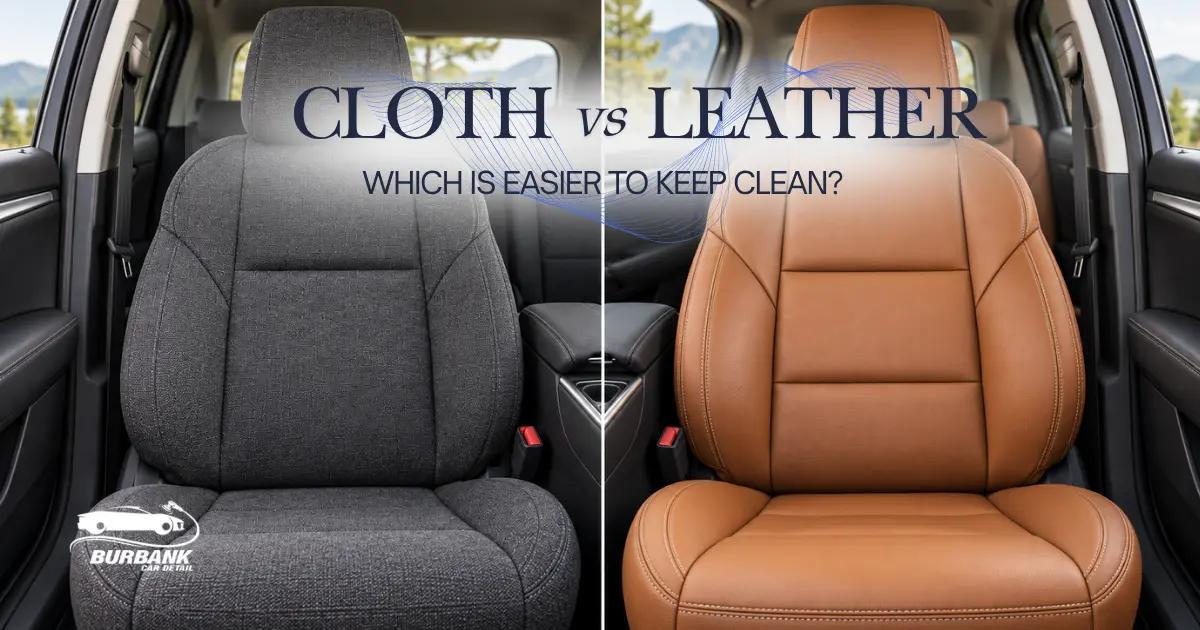
Coffee has an impressive ability to miss the cup holder and find the exact center of a car seat. That is usually when the debate over cloth and leather car seats stops being theoretical. If you spill something on well-maintained leather and catch it quickly, the surface is generally easier to wipe clean because liquid does not soak in as readily as it can with fabric. Cloth, on the other hand, can absorb the mess into its fibers, which may turn a five-second spill into a stain you notice again three days later.
Progressive similarly identifies easier spill cleanup as one of leather's main advantages over cloth. But that does not automatically make leather the easier material to own. Leather may simplify the emergency coffee cleanup while requiring more attention to the material itself. Cloth asks less from you on an ordinary day but can make stains and odors more stubborn when something goes wrong. So which one is easier to keep clean? It depends on whether your bigger problem is frequent messes or ongoing maintenance.
Cloth vs. Leather Car Seats: Key Cleaning Differences
The basic difference comes down to how the two surfaces interact with dirt and liquid. Fabric upholstery contains fibers that can absorb moisture. Once a spill moves below the visible surface, the problem can become harder to deal with because cleaning the mark on top does not necessarily remove everything beneath it. Well-maintained leather usually gives you more time to deal with a surface spill before it penetrates or leaves a noticeable mark. Progressive notes that leather does not absorb messes as readily as cloth and is generally easier to wipe after a spill. That still does not mean leather is waterproof or stain-proof.
And there is another wrinkle: not every seat that looks like leather is natural leather. Many vehicles use vinyl, synthetic leather, or leatherette. Those materials can have different care requirements, which is why identifying the upholstery before treating it matters.
|
Cleaning concern |
Cloth seats |
Leather seats |
|
Fresh spills |
Liquid can be absorbed into fabric. |
Often easier to wipe from the surface |
|
Stains and odors |
Can remain in fibers after a spill |
Usually less absorbent, but can still stain |
|
Ongoing care |
Moisture control matters. |
Care varies by leather type and finish. |
So if you're asking which car seats are easier to clean after a sudden spill, leather generally has the advantage. If you're asking which one requires less thought over years of ownership, the answer becomes less obvious.
How Do Spills, Stains, and Odors Compare?
Imagine the same cup of coffee landing on both materials. On leather, you may have a puddle sitting on the surface. On cloth, you may have coffee already making plans to move permanently into the seat cushion. That difference changes both the immediate cleanup and what can happen afterward.
Fresh Spills and Set-In Stains
Timing matters with either material. A fresh drink spill on well-maintained leather can often remain closer to the surface, giving you a better chance to deal with it before it becomes a lasting mark. Progressive points to this reduced absorption as one reason leather seats are generally easier to clean. Fabric behaves differently. The liquid can travel into the fibers instead of remaining entirely visible. That means a spill noticed immediately and the same spill discovered after lunch may become two very different cleaning jobs
Ford's upholstery guidance also shows why moisture has to be managed carefully with fabric. Its current owner-manual instructions warn against oversaturating cloth and note that improper spot cleaning can leave a visible ring. That is where car seat stain removal can become more involved.
The type of stain matters too. Coffee, soda, grease, ink, and food residue do not necessarily respond in the same way. Instead of turning this comparison into a cleaning tutorial, our guide to removing stains from cloth car seats covers the actual methods for different types of fabric stains. Leather still deserves some respect. Leaving coffee, sunscreen, dye, oil, or another substance sitting on the surface can still discolor or damage it. “Easier to wipe” and “impossible to stain” are very different claims.
Lingering Odors
A seat can look clean and still remind you of what happened there. That is especially relevant with cloth. Because fabric can absorb liquid below the visible surface, removing the stain does not always mean you have removed everything responsible for the smell. Think about a drink forgotten on the back seat.You may eventually stop seeing the spill. Your nose may not have received the same memo. Progressive notes that stains and odors can become difficult to remove once they set into fabric. Leather generally retains less of this material because it is less absorbent, although that does not make leather or the entire cabin odor-proof.
Odors can also come from carpets, padding, food, moisture, air-conditioning systems, or other interior surfaces. So if the smell remains after the visible seat mark is gone, the seat may not be the whole problem.
What Ongoing Care Does Each Material Need?
This is where leather loses some of the points it earned during the coffee spill. Both materials collect dust, crumbs, body oils, and everyday dirt. Leather does not somehow repel the cracker crumbs your passenger carefully ground into the seat seam. The difference is how each material wants to be treated.
Cloth: The main concern is often moisture control. Ford recommends removing loose dirt first and warns against oversaturating fabric during spot cleaning because water and cleaning solution can leave rings or set them into the upholstery. This means cloth can be relatively undemanding when it is clean, but deeper messes may require more work because moisture has to be removed from the fabric rather than simply wiped away.
Leather: Routine leather car seat care depends on the exact upholstery. Ford's guidance for leather includes removing loose dirt and using material-appropriate methods, while certain specialty leathers, such as Ford's King Ranch top-grain leather, receive additional care instructions.
That is an important distinction. You should not assume every leather seat needs the same conditioner, the same treatment, or the same maintenance routine just because another vehicle's manual recommends it.
If leather is what you already have, our guide on how to clean and condition leather car seats explains the differences between natural and synthetic upholstery and why the material should be identified before cleaning.
For both materials, the safest rule is wonderfully unexciting: Check what the manufacturer says your seats are made from before experimenting on them.Modern interiors can combine genuine leather, coated leather, vinyl, synthetic leather, fabric, microfiber, and other surfaces. One cleaning routine does not automatically fit all of them. That is the real lesson behind cloth vs. leather seat maintenance. Cloth can require more work when a mess penetrates it. Leather can require more thought even when nothing dramatic has been spilled.
Which Seats Better Suit Your Cleaning Routine?
There is no universal winner because people are remarkably talented at making different kinds of messes. Your normal routine matters more than the showroom argument.
-
If spills happen frequently: Leather may make everyday life easier because fresh liquid generally remains closer to the surface and can be easier to address quickly. For family cars, commuting with coffee, or anyone whose water bottle seems to have a personal grudge against cup holders, that can be a meaningful advantage.
-
If your car sees light use: Cloth may not feel difficult to maintain at all. If there are few spills and you already keep loose dirt under control, its biggest disadvantages may rarely become noticeable.
-
If you have little time for upkeep: Think about what you dislike doing more. Leather can make immediate cleanup easier, but the material itself may need more specific care. Cloth may need less material-specific attention during normal use, but one forgotten spill can turn into a deeper stain or lingering odor.
That is why comparing leather vs. cloth seats purely by asking which one is “low maintenance” misses the point. They create different maintenance problems. Leather tends to win the first five minutes after the coffee spills. Cloth can be perfectly easy to live with during the other 364 days when nobody spills anything.
So, cloth vs leather car seats: which is easier to keep clean? For everyday spills, well-maintained leather generally wins. Its less-absorbent surface can make fresh messes easier to handle before they become stains or odors. Cloth is more likely to absorb liquids, which can make a forgotten spill harder to deal with later. But cloth does not necessarily demand the same material-specific care that some leather upholstery requires. So the better choice depends on the kind of maintenance you want to deal with. Frequent drinks, kids, and surprise back-seat disasters? You may appreciate easier surface cleanup.
Few spills and simple routine care? Cloth may suit you perfectly well. And if the seats are already dirty, comparison shopping is no longer the problem; you just need to clean what you have. Use the matching cloth or leather guide for the detailed process rather than treating the two materials the same way. For stains, embedded dirt, or upholstery that needs more than routine care, Burbank Car Detail's professional car upholstery cleaning works with both fabric and leather interiors and can recommend an approach suited to the material in your vehicle. Because whether the seats are leather or cloth, eventually someone is going to spill the coffee.
 /
/ /
/