
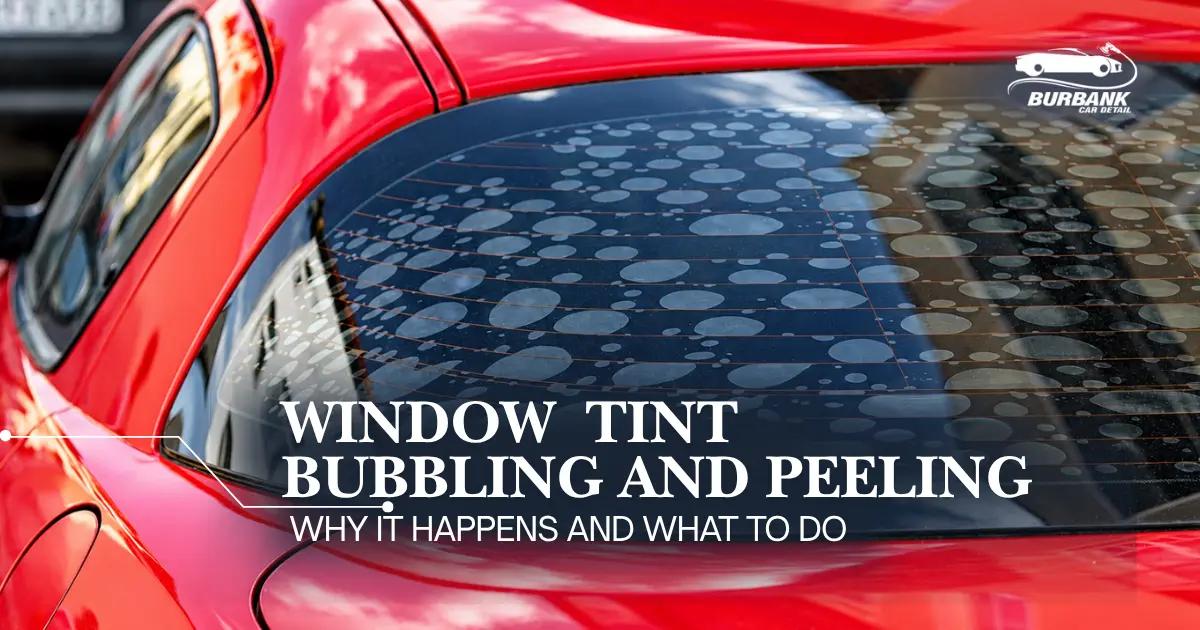
Seeing bubbles or lifting edges after getting your windows tinted can be frustrating, especially when the film is new. But window tint bubbling does not always mean the installation has failed.
Small moisture pockets can appear while the recently installed tint is drying. Depending on the film, weather, and installation conditions, they may disappear as the moisture evaporates. Persistent air bubbles, large distorted areas, or window tint peeling away from the edges are different and deserve a closer look.
The right next step depends on when the tint was installed, what the defect looks like, and whether the film has already bonded to the glass. Before trying a DIY repair, give the new tint its recommended curing time and contact the installer if the problem remains.
Why Is My Window Tint Bubbling or Peeling?
Bubbling and peeling can develop for several reasons, and appearance alone does not always reveal the cause. Ceramic Pro identifies installation issues, environmental exposure, material quality, and aftercare as possible contributors. Dust or dirt left on the glass before installation can become trapped beneath the film. Air or moisture that is not properly removed during installation can also create visible pockets. Poor adhesive bonding may lead to lifting, particularly around the film's edges.
Heat and prolonged sun exposure can also affect window film over time. Ceramic Pro notes that repeated heat and UV exposure may contribute to adhesive deterioration, which can eventually show up as distortion, bubbling, or peeling. That means peeling window tint edges on an older installation may have a very different cause from a few small bubbles visible immediately after new tint is applied.
Fresh film also needs time to bond. Disturbing it too early by operating the windows or otherwise stressing the edges can interfere with that process. Exact curing recommendations vary by manufacturer and climate, so the installer's instructions should take priority. Do not assume that every bubble proves poor workmanship. The important question is whether you are seeing temporary installation moisture, trapped air, contamination, or deterioration of film that has already been in place for some time.
Are Bubbles in New Window Tint Normal?
Some can be. Gila distinguishes between water bubbles and air bubbles after installation. Small water pockets trapped beneath newly applied film can dry out over several days. Air bubbles, however, do not simply disappear in the same way and may require correction. This distinction is especially important during window tint curing time. Gila says its automotive film can take roughly a week to 10 days to fully cure, with dry, sunny weather speeding the process and colder or wetter conditions slowing it down. During that period, the film may temporarily look hazy or cloudy. XPEL gives similar product-specific guidance for its PRIME automotive window films. It says haziness or moisture bubbles can remain visible for up to 10 days after installation while application moisture dries. XPEL recommends waiting approximately one to five days before rolling down or cleaning the windows, depending on climate.
So, will tint bubbles go away on their own? Some moisture bubbles may. Trapped air bubbles generally will not. And because different films have different drying instructions, there is no single curing period that should be applied to every installation. If the film is still within the expected drying period and the issue looks like small moisture pockets, waiting may be appropriate. If bubbles remain beyond the expected curing period, increase in size, or appear together with lifting edges, contact the installer for an assessment.
Can Bubbling or Peeling Window Tint Be Repaired?
Sometimes, but not every defect can be repaired once the film has bonded. Gila's guidance shows why timing matters. If an air pocket is noticed immediately during installation, it may be possible to correct it while the film is still workable. Once adhesive film has bonded to the glass, however, Gila says removal may be necessary, and its adhesive film cannot simply be removed and installed again.
That is why an installation-stage correction should not be treated as a universal method to fix bubbling window tint months or years later.
For existing film, window tint repair depends on factors such as:
-
Whether the problem is moisture or trapped air
-
How long the tint has been installed
-
Whether the adhesive has already bonded
-
Whether only one small area is affected
-
Whether the film is peeling or distorted across a larger section
-
Whether the tint itself has begun to deteriorate
Persistent bubbling, visible distortion, and edges that continue lifting can indicate that window tint replacement is more appropriate than another attempt to press the film back down. Avoid trying to puncture bubbles with needles, apply household adhesive, or use uncontrolled heat as a general repair method. Those approaches can damage the film, glass, defroster lines, or surrounding trim and may complicate a warranty claim. If the installation was professionally completed, the original installer should usually be the first person to inspect it.
What Should You Do Before Paying for Replacement?
Before assuming you need to pay for new tint, document the problem and check whether the original installation may still have warranty coverage.
Start with a few simple steps:
-
Photograph the bubbling, lifting, or peeling from several angles.
-
Note when the tint was installed.
-
Record when you first noticed the problem.
-
Identify the film brand and product if you know them.
-
Find the installation receipt and warranty paperwork.
-
Contact the original installer and ask for an inspection.
This matters because warranty terms can vary significantly by manufacturer and installation. LLumar, for example, states that its automotive tint products carry a manufacturer's lifetime limited warranty, but it also makes clear that restrictions apply. Its FAQ notes that some discoloration or film problems may qualify for removal and replacement when the warranty applies. That does not mean every bubble, scratch, edge defect, or damaged film receives free replacement. Coverage can depend on the film, installation, purchaser, documentation, cause of the problem, and warranty terms.
Checking the window tint warranty before authorizing a window tint replacement can therefore save an unnecessary expense and give the installer a chance to determine whether the issue is covered.
How Can You Help Prevent Tint Problems?
Good window tint aftercare begins by following the instructions for the specific film that was installed. The waiting period before rolling a window down is not necessarily the same as the time required for all installation moisture to disappear. That is another reason not to use a universal number for every tint product. For its PRIME automotive films, XPEL recommends waiting approximately one to five days before rolling down or cleaning the windows, depending on climate. It also notes that moisture bubbles or haziness can remain for up to 10 days while the film dries.
For ongoing cleaning tinted windows, XPEL recommends:
-
Using a microfiber towel lightly dampened with water
-
Using a mild, non-ammonia glass cleaner when necessary
-
Avoiding abrasive materials such as scouring pads
Those are XPEL's recommendations for its own film. Other manufacturers may give different care instructions, so owners should follow the guidance for the product installed on their vehicle. To help prevent window tint peeling, avoid putting unnecessary stress on fresh film, especially around window edges. Give the installation the recommended time to cure before cleaning or operating the windows, and use gentle products and materials afterward.
Proper aftercare cannot prevent every future problem, but it can reduce avoidable damage while the adhesive is bonding and during routine cleaning. Window tint bubbling is not always a sign that the film needs to come off immediately. Small moisture pockets in newly installed tint may disappear during the normal curing period. Air bubbles, persistent distortion, and window tint peeling are different and should be evaluated rather than assumed to be part of normal drying.
If the tint is new, follow the manufacturer's curing instructions and give normal installation moisture time to dry. If the bubbles remain, edges start lifting, or an older film is deteriorating, contact the installer before attempting a DIY repair.And before paying for replacement, check the installation date, receipt, film brand, and warranty terms.The goal is not simply to make the defect disappear. It is to determine whether the film needs more time, professional correction, or complete replacement and then choose the option that makes sense for its actual condition.
 /
 /