
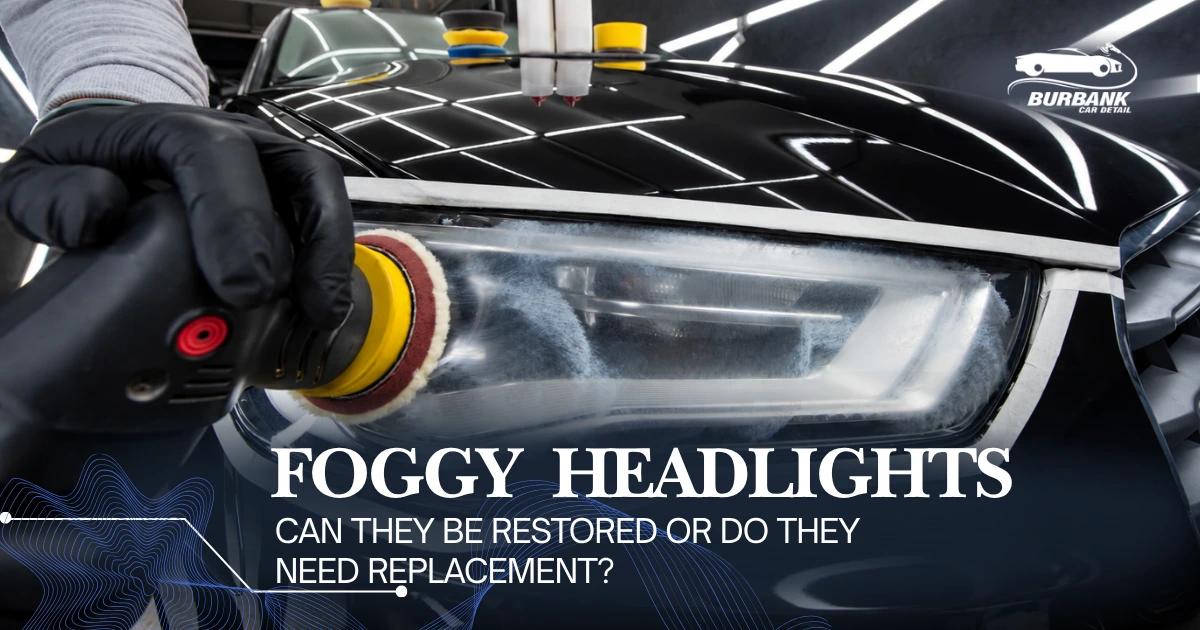
Foggy headlights do not automatically mean you need new headlight assemblies. If the yellowing or cloudiness is mainly on the outside of a plastic lens, headlight restoration can often improve the clarity considerably. If the problem is inside the assembly, the lens is severely deteriorated, or previous restoration attempts no longer leave a smooth, clear surface, replacement may be the better option. The first step is therefore figuring out what kind of fogging you are dealing with.
Some headlights are simply dirty. Others have an oxidized outer surface. And some have condensation, cracking, or deterioration that polishing the outside cannot fix. That difference determines whether restoration is a realistic foggy headlights fix or whether the assembly needs a closer inspection.
What Causes Foggy or Cloudy Headlights?
Most modern headlights use plastic outer lenses. Over time, sunlight and environmental exposure can degrade the protective surface and leave the lens looking yellow, dull, or cloudy. AAA notes that sunlight breaks down the plastic coating on headlight lenses, contributing to yellowing and clouding as the vehicle ages. 3M similarly describes headlight restoration as removing yellowing, oxidation, haze, dirt, and other surface buildup from plastic lenses. That is the classic case of oxidized headlights. But not every hazy-looking headlight is oxidation.
Before assuming you need headlight haze removal, look closely at where the problem appears to be. If the cloudiness is on the exterior surface and remains after a normal wash, oxidation or surface deterioration may be involved. If the haze or moisture appears behind the lens, the problem may be inside the assembly rather than something that can be polished from the outside. There is also a difference between ordinary dirt and true oxidation. Road film, dust, and grime may wash away. Oxidation usually leaves the plastic itself looking dull or yellow because the outer surface has deteriorated. That is where headlight oxidation removal becomes different from simply cleaning the headlights.
Can Foggy Headlights Be Restored?
Often, yes. Headlight lens restoration is generally most suitable when the yellowing, haze, or cloudiness is on the outer surface of a restorable plastic lens. 3M's restoration instructions show the general approach clearly: the surrounding paint is protected, the damaged surface is refined with progressively finer abrasives, and the lens is then polished to restore clarity.
At a high level, the process usually involves:
-
Cleaning the headlight
-
Protecting the surrounding paint
-
Refining the oxidized surface
-
Polishing the lens
-
Applying protection when the chosen system calls for it
That does not mean every cloudy lens needs the same amount of work. Light oxidation may need relatively little correction. A heavily yellowed lens can require a more involved sanding and polishing process. The shape of the lens matters too. Curves, edges, raised lettering, and surrounding body panels can make some headlights harder to work on safely. The goal of professional headlight restoration is not to grind away as much material as possible. It is to remove or refine the deteriorated outer layer sufficiently to improve transparency while maintaining control over the surface. 3M's own procedure uses several progressively finer abrasive steps before polishing, which shows why restoring a severely oxidized lens is different from wiping it with a cleaner. So if you want to restore cloudy headlights, exterior oxidation is generally the most promising situation. An internal problem is another matter.
When Do Headlights Need Replacement?
Restoration has limits. AAA says replacement may become necessary when the lens is severely deteriorated and restoration still leaves the surface rough or cloudy. It also notes that headlights restored repeatedly may eventually reach a point where age and UV deterioration make further restoration less useful. That means replacement deserves consideration when:
-
The lens remains rough or cloudy after proper restoration
-
Severe deterioration has affected the lens material
-
The headlight has already been restored several times
-
Damage exists inside the assembly
-
Cracking or structural damage affects the housing or lens
-
The lighting problem is not caused by exterior oxidation
A surface restoration kit cannot repair something happening behind the lens. That is particularly important when moisture is involved. Condensation can have different causes, and a temporary trace of fogging does not automatically prove that the headlight assembly is ruined. But persistent internal moisture, water intrusion, damage to seals, or defects inside the assembly deserve an inspection before more exterior polishing is attempted. This is where headlight lens repair and headlight restoration separate. Restoration works on an exterior surface that can be refined. Repair or replacement addresses damage that polishing cannot reach. The same logic applies to a yellow headlights repair decision. If the yellow color is caused mainly by exterior oxidation, restoration may help. If the lens material has deteriorated too far, replacing the assembly may provide the more reliable result.
What Should You Look for in a Headlight Restoration Kit?
Not all kits approach the job the same way. Car and Driver's testing found substantial differences in how much sanding, polishing, protection, and user effort various kits require. Some systems are designed for heavier oxidation, while others are better suited to lighter maintenance work. So instead of searching only for the best headlight restoration kit, look at what the kit is actually designed to do.
Consider these factors:
-
Severity of oxidation. A simple wipe-on cleaner may be useful for light haze but may not be enough for a heavily oxidized lens. Car and Driver's testing included both light-duty systems and more aggressive sanding-based kits.
-
Manual versus drill-powered application. Some kits use hand sanding. Others use a drill attachment to speed up sanding or polishing. A headlight polishing kit that requires power tools may be more involved than a beginner expects.
-
Number of sanding and polishing stages. Heavier restoration often requires a progression from coarser to finer abrasives rather than one polishing step.
-
Protective finish. Some kits include a UV-resistant or ceramic-style protective coating after the lens is restored. Car and Driver specifically highlights protective coatings as one difference among the products it tested.
-
Lens compatibility. Most consumer kits are intended for plastic lenses, but you should still confirm that the product is appropriate for your vehicle.
-
Safety instructions. Follow the manufacturer's directions, including eye protection, gloves, ventilation requirements, and precautions around painted surfaces. Car and Driver specifically recommends protective equipment and care when using drill-powered systems.
-
DIY headlight cleaning can work well when the lens condition matches the kit and the instructions are followed carefully.
But headlight restoration at home becomes less attractive when you are unsure whether the haze is internal, the lens is badly deteriorated, or the headlight has already been restored several times. In those situations, a professional assessment can help determine whether polishing is still worthwhile before you buy a kit and start sanding.
Foggy headlights do not always need replacement. When yellowing or cloudiness is mainly caused by exterior oxidation, headlight restoration can often improve lens clarity by refining and polishing the damaged surface. When the lens stays rough or cloudy after restoration, has deteriorated severely, or has been restored repeatedly, replacement may become more appropriate. Problems inside the headlight assembly also cannot be solved by polishing the exterior.
So the practical decision is: exterior haze or yellowing? Restoration may help. Persistent internal moisture, structural damage, or severe lens deterioration? Have the assembly inspected before assuming another restoration will fix it. If you are unsure which condition you have, Burbank Car Detail can inspect the headlights and determine whether professional restoration is a reasonable next step before you move to replacement.
 /
/ /
/