
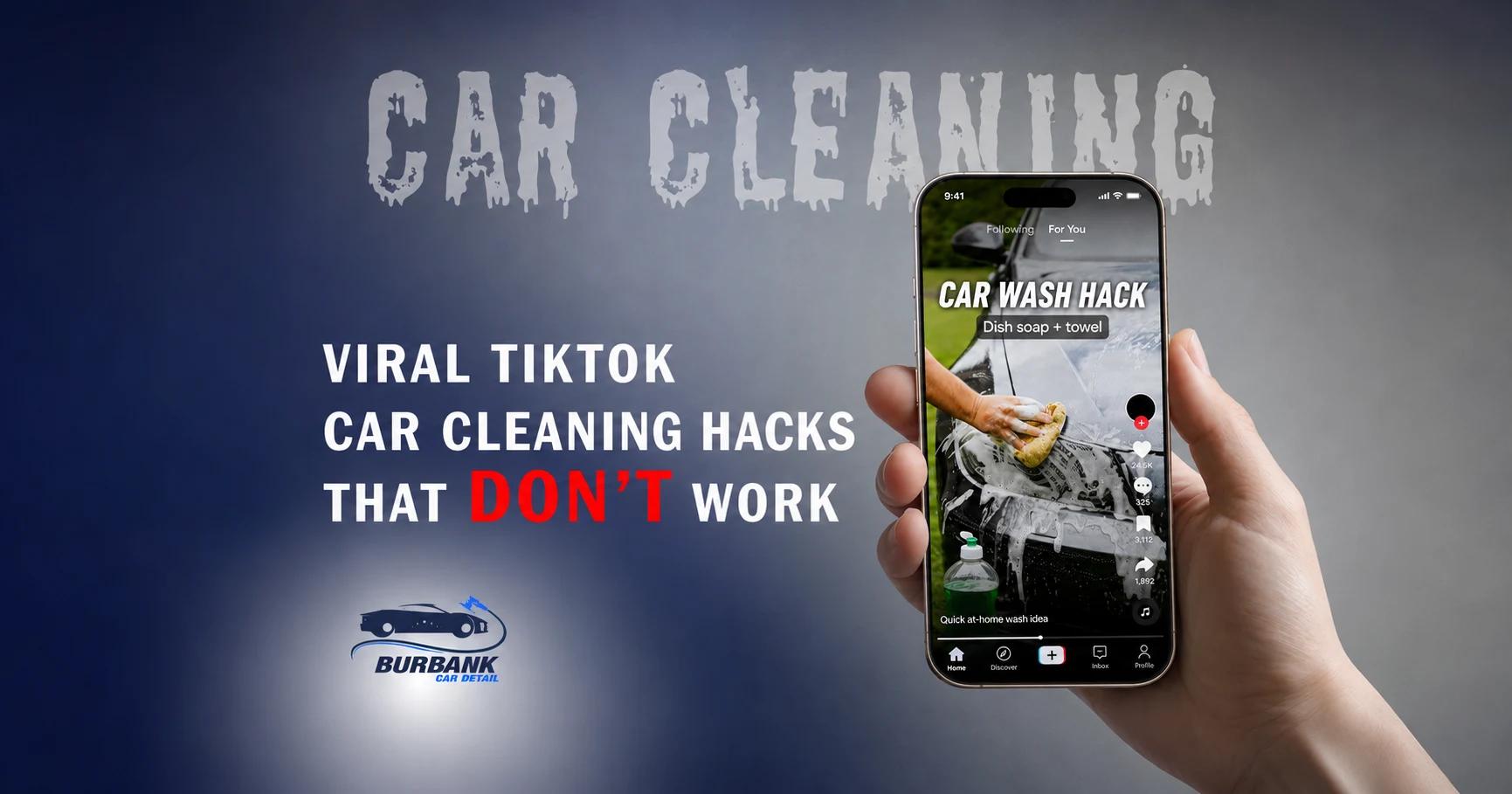
If you’ve ever fallen into a 2 a.m. TikTok spiral, you already know how it goes. One video is a cute dog. The next is a guy cleaning his engine with Coca-Cola. And 17 videos later, you’re standing in your garage thinking: “Wait… can I clean my entire car with toothpaste, Coca-Cola, and vibes?” Short answer: NO! Long answer: also NO… but with consequences. TikTok car cleaning hacks are everywhere because they’re fast, visually satisfying, and designed to make you think you just unlocked a secret life upgrade.
The problem? A lot of them are closer to “internet science experiments” than real car care. Let’s break down the biggest viral myths before your car becomes the next test subject.
Toothpaste for Scratch Removal
One of the most famous car scratch removal hacks on TikTok is simple: rub toothpaste on scratches and watch them disappear. Sounds believable, right? It even has that “grandma secret that works better than expensive tools” vibe. Here’s the truth. Toothpaste is mildly abrasive. That means it can slightly polish very light surface marks. But your car’s paint isn’t a bathroom sink. Modern paint has layers: a clear coat, color and primer. When you scrub toothpaste into it, you’re basically doing DIY sanding with mint flavoring.
- Light scratches? Maybe a temporary illusion of improvement
- Real scratches? Nothing changes
- Aggressive rubbing? Congratulations, you just dulled your clear coat
So yes, it kind of works… in the same way, “hoping” works as a repair strategy.
Magic Eraser for Scuffs and Stains
TikTok loves a good Magic Eraser car cleaning hack because the results look dramatic. One swipe and boom; stain gone. What they don’t show is what else is gone. Magic Erasers are basically super-fine sandpaper. They don’t clean surfaces, they grind them down.
Using them on:
- Paint
- Leather
- Interior plastics
…can strip protective coatings and leave surfaces dull, patchy, and aging faster than a 2008 sedan on its last oil change. Looks satisfying on camera. Not so satisfying six months later.
Dish Soap Instead of Car Shampoo
This is one of the most common DIY car cleaning hacks: “Just use dish soap; it’s the same thing.” It’s not. So let’s answer the classic question: can I use dish soap to wash my car? Technically yes. Practically no. Dish soap is designed to destroy grease. That’s great for pans. Not great for your car’s wax, sealant, or protective coating. Using it regularly will leave your paint unprotected and exposed to faster fading and dirt buildup. However, there is one safe-ish use case: glass. Dish soap (especially ammonia-free) can be used on windows and tinted glass for a streak-free finish. But for full-body washing? Stick to proper car shampoo (aka pH-balanced automotive soap made specifically for paint). Your car is not a frying pan. Treat it accordingly.
Coca-Cola for Rust Removal
Ah yes, the classic: “How to Use Coca-Cola to Get Rid of Car Rust.” This hack refuses to die. The idea comes from the acidity in cola supposedly breaking down rust. And yes, if you leave metal in soda long enough, something will happen. But your car isn’t a science fair project. While Coca-Cola may loosen very light surface rust temporarily, it:
- Leaves sticky sugar residue
- Attracts dirt immediately
- Doesn’t actually restore metal
- Requires heavy cleaning afterward anyway
So the real question isn’t “Does Coke remove rust from cars?” It’s, "Why are we turning cars into soda experiments in the first place?" If you actually want rust removed, use proper rust treatment, not a beverage.
Vaseline for Dashboard Shine
This one wins TikTok points for drama. Apply Vaseline - the dashboard looks brand new - cinematic lighting - viral video. But here’s what happens in real life:
- Greasy buildup everywhere
- Dust sticks instantly
- Gloss turns into glare
- The steering wheel becomes slightly… questionable to touch
So while people ask “Can I put Vaseline on my dashboard?” or “Is Vaseline good for car polish?" the answer is: not unless you enjoy cleaning fingerprints for the rest of your life. Also, no- don’t use it on tires either unless you want your wheels to look shiny for 10 minutes and dirty for 10 days.
Slime or Gel Cleaners for Air Vents
The car cleaning slime trend looks magical. Press it into vents - pull it out - dust disappears like magic. Except it’s not magic. It’s surface-level cleaning. Problems include:
- Residue left behind in tight spaces
- Inconsistent cleaning performance
- Doesn’t remove deeper dust buildup
It’s satisfying, yes. It’s a full cleaning solution? Not really.Think of it as a cosmetic touch-up, not detailing.
Olive or Coconut Oil for Scratch Fixes
Another viral favorite in the car scratch removal DIY world is using oils to “erase” scratches. The logic: oil fills imperfections, so scratches disappear. What actually happens:
- Scratch looks temporarily less visible
- Oil wears off quickly
- Dirt sticks to the oily layer
- Nothing is actually repaired
So if you’re wondering “Can you use coconut oil on car scratches?”- yes, but only if your goal is a temporary illusion and a permanently confused car surface.
WD-40 for Scratches and Dirt
TikTok absolutely loves WD-40. People spray it on paint, rims, bumpers then act like they just performed automotive surgery. Yes, it creates instant shine. That’s why it goes viral. But:
- It does NOT remove scratches
- It only temporarily hides imperfections
- It attracts dust over time
- It is not a protective solution
So when people ask “Does WD-40 really remove scratches?” The honest answer is no. It just distracts you from them for a little while.
Is Vinegar Safe for Car Cleaning? What Viral Videos Don’t Mention
Vinegar is the king of DIY natural cleaners online. It cuts grime, removes stains, and feels like it should fix everything in life. But cars are sensitive. While vinegar can help clean glass or light grime, frequent use can damage:
- Paint protection layers
- Rubber seals
- Exterior finishes
So when you see claims like “Can we use cola or white vinegar to remove rust from cars?” or “What removes rust better, Coke or vinegar?” remember: both belong in the kitchen more than the garage.
How to Recognize Bad Car Cleaning Advice on TikTok
Here’s the real skill: spotting nonsense before it touches your paint. Bad car cleaning hacks usually:
- Show only dramatic before/after shots
- Skip long-term results
- Ignore product safety
- Promise “one-step miracles”
Real car care is not one-step. It’s a process. If a video looks like magic, it’s probably marketing.
When to DIY and When to Choose a Pro Service
DIY car detailing is great for:
- Regular washing
- Light interior cleaning
- Quick maintenance between services
But go pro when:
- Scratches need real correction
- Paint looks dull or damaged
- Deep interior cleaning is required
- You care about long-term value
Professionals use proper tools, safe chemicals, and techniques that don’t rely on internet myths or soda experiments.
Tips for Safe and Effective Car Cleaning
Forget shortcuts. Use:
- Proper car shampoo (not dish soap)
- Microfiber cloths
- pH-balanced cleaners
- Protective wax or sealant
And always ask yourself: “Is this designed for cars… or for viral views?”
TikTok is great for entertainment. Car care? Not always. Most viral car cleaning hacks prioritize shock value over actual results. And while toothpaste, cola, or Vaseline might give you a temporary “wow” moment, they rarely give you long-term protection. Real car care is slower but it works. If you want your vehicle to stay clean, protected, and actually look good beyond a 10-second video trend, stick to proven methods or trust professionals like Burbank Car Detail Services instead of the algorithm’s latest experiment. Because your car deserves better than becoming a TikTok science project. Need it done right the first time? Call (818) 230-2333 and let the pros handle it.
 /
/ /
/